
My favourite example is probably salt and vinegar crisps. Over the past few years I’ve been compiling a list of products that are unexpectedly made, at least in part, from chemicals derived from oil and gas. Artificial vanilla flavouring, chewing gum, shower gels and, yes, the vinegar flavouring in salt and vinegar crisps, which is (depending on which brand you favour) often made from acetic acid, derived from natural gas. As petrochemical products go, I concede that these are somewhat random, but you get the idea: oil and gas are such pervasive parts of our lives that they are, to all extents and purposes, everywhere.
This came as something of a surprise to most economists in 2022, the last time war triggered a significant spike in energy prices. Their models told them higher wholesale gas prices would show up in the form of higher heating and power bills, which is perfectly logical. But in the following months, it wasn’t just utility bills that went up. So did the price of tomatoes, since they are mostly grown in greenhouses heated with natural gas and are fertilised with nitrogen-based chemicals made from natural gas. So, too, did table salt (produced with the help of boilers powered by, yes, natural gas). An energy price shock rapidly became an everything price shock.
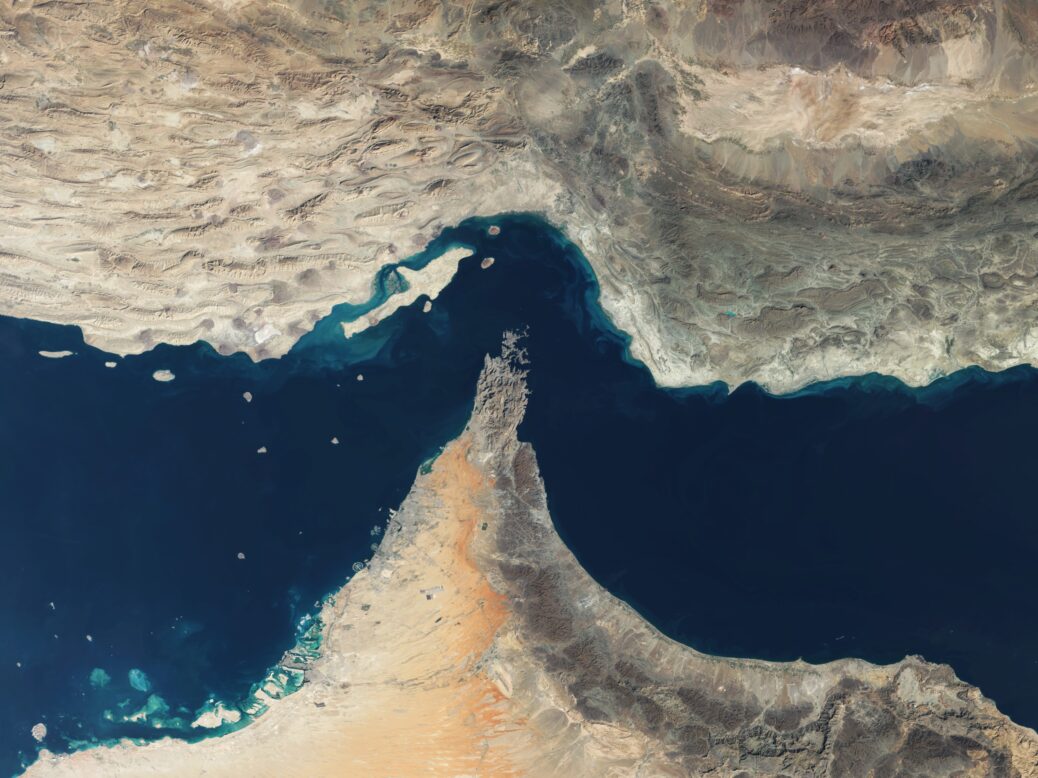
That, though, is the inexorable logic of the world we live in, where the oil and gas diaspora is so vast and varied that it is hard to escape. And it is the lesson we must take with us now, in 2026, as the world faces the prospect of yet another energy price shock – quite possibly the big one. I say the “big one” because the closure of the Strait of Hormuz is one of those scenarios Gulf leaders and energy analysts have been fretting about for decades, without ever quite resolving it. There is nowhere near enough pipeline capacity to export the oil and gas being pumped out of the Persian Gulf, so most of it still has to be shipped. And since the cost of sending tankers through Hormuz is prohibitive at the moment, the oil and gas has nowhere to go.
All of which helps explain why the world’s biggest oil terminal (Ras Tanura in Saudi Arabia) and one of the world’s biggest liquefied natural gas terminals (Ras Laffan in Qatar) have been closed. It explains why Kuwait and Abu Dhabi have pared back oil production, a move that could, if handled improperly, cause permanent damage to their oil reservoirs. A few weeks ago each of these eventualities would have been close to unthinkable; now, the energy sector’s worst nightmare is playing out in real time.

Where things go from here is, of course, unpredictable. When I started writing this column, oil prices were above $100 a barrel and heading higher. Then Donald Trump stood on a stage in Florida and declared that the war was nearly over, whereupon the price dropped back down below $100. But, obviously, the longer the Strait is closed, the higher energy prices will go, and the greater the impact on the rest of us.
That impact will come in three acts. The first is the least intuitive. As financial markets anticipate higher prices, they will begin to price in higher interest rates. Mortgage costs are now climbing again. Second, energy bills will go up the next time the price cap is updated in July. The rise could run to hundreds of pounds. Third come the indirect consequences, the rise in prices of products you never knew depended on oil and gas, including crisps.
At this point you’re probably thinking: aren’t we less exposed to an energy price shock than we were in the 1970s? In one respect, the answer is yes. The proportion of British and European GDP that depends on oil and gas is considerably smaller today than it was in previous decades. However, there are three important provisos. First, less exposure doesn’t mean no exposure, and energy costs nonetheless have a habit of infusing all other prices. Second, the UK and Europe are far more dependent on imported energy than they were in previous decades, since we have shifted from dirty but relatively plentiful coal to cleaner but scarcer gas. It is that import-dependence that leaves Europe so vulnerable to events in the Gulf (and, for that matter, Russia and North America, the world’s other biggest oil- and gas-producing regions). Third, to some extent, the drop in our oil dependence is a function of something else: we simply don’t manufacture goods as much any more, and instead import them from other countries, mostly in Asia.
Much as we may like to think that we have dematerialised – that our lives and livelihoods revolve entirely around ideas and services – we still live in what I call a Material World. Even in the 21st century, every pound of GDP still depends on basic materials mined and refined from the Earth’s surface. Cement, fertilisers, steel, copper, fibre optics, rare earths, lithium – and, yes, oil and gas. This never went away; we just stopped thinking about it.
At some point, in the coming decades, we will hopefully have come up with cheap, easy ways of making fertilisers without burning natural gas. We might have an energy system that no longer needs fossil fuel back-up. We might have even come up with a way of making shampoos and crisp flavourings without emitting carbon dioxide. But we are not there yet. This is the real, inconvenient truth of our society. Much as we may dislike it, we cannot wish away our dependence on oil and gas. If that wasn’t already clear from what happened in 2022, when Russia invaded Ukraine, it is about to become clear all over again.
[Further reading: John Healey: “There’ll be no repeat of Iraq’s mistakes”]
Content from our partners



Related


This article appears in the 11 Mar 2026 issue of the New Statesman, The Great British Crisis
Join the debate
Subscribe here to comment